 Athena v1Natural conversation, connected to real work.
Delegating Work Without Losing the Conversation
How Athena keeps talking while a working agent gets things done: where the work runs, what comes back, and how to keep what is said true to what happened.
Nobody wants to sit in silence while a computer thinks. Athena separates talking from doing, so a person can keep speaking, add a detail or change their mind while the work is under way. The voice stays in the conversation. A working agent takes each job, uses its tools and comes back with an outcome.
What a working agent can be
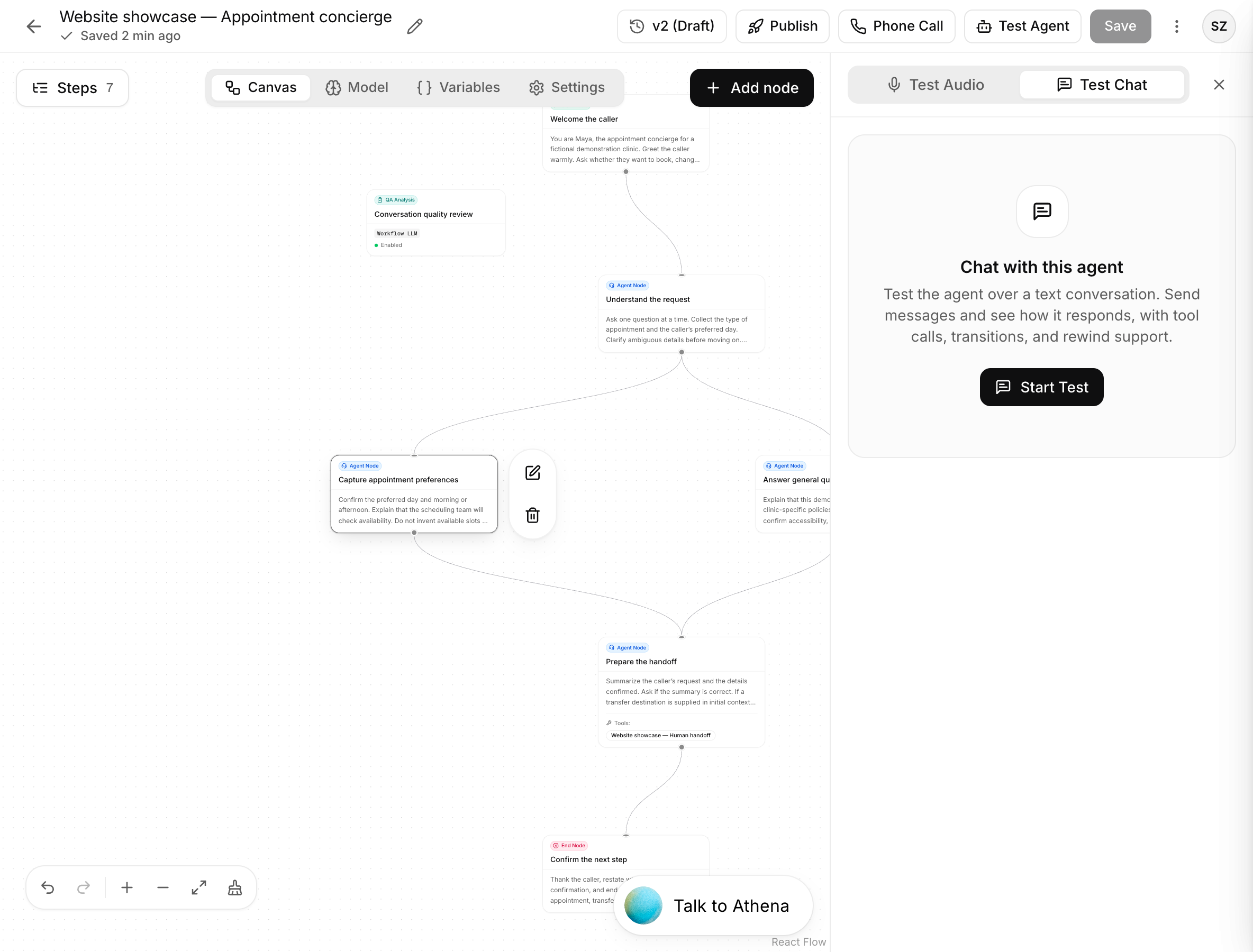
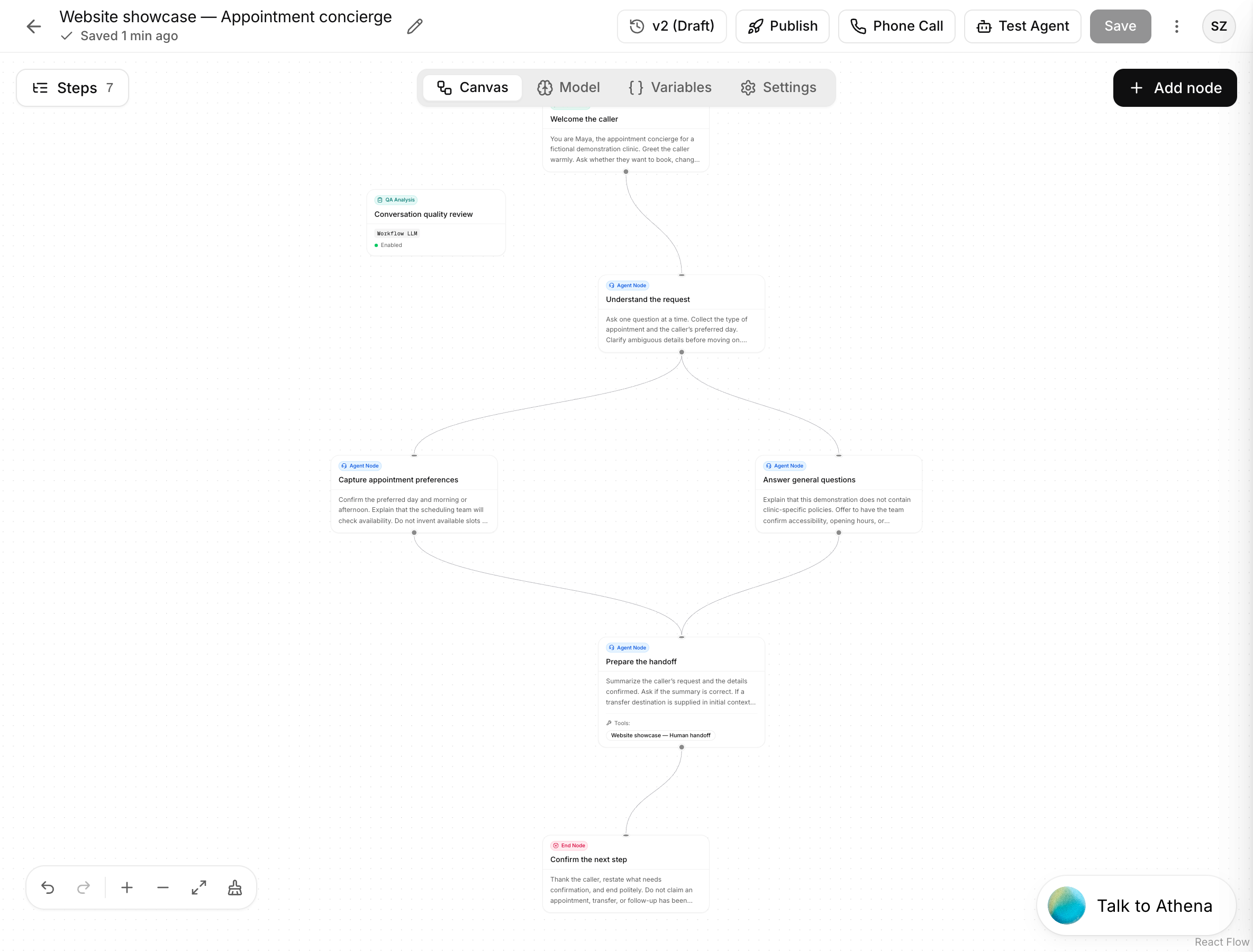
The conversation does not care what sits behind it, which is what makes this pattern flexible. The worker might be a quick lookup against your records, a workflow you have already built, or a capable agent that plans a task, runs commands, edits files and keeps at it for many minutes. Choose by the job:
- Let Athena run it when you want the shortest path to a working agent and your tools are ready to connect.
- Run your own when results must be checked or combined before anyone hears them, when you need several models, or when you need firm control over what each step can see.
Whichever you choose, permissions, approvals and the record of what happened stay under your control.
Hold the facts outside the conversation
Conversation is a poor database. Words get misheard and older turns get condensed. Keep the real state of each task somewhere dependable: what was asked, what was confirmed, what is running and what has finished. Give the worker enough of the transcript to make sense of a bare "yes" or "Thursday, not Friday", and treat transcripts as helpful evidence, not as the record.
Three kinds of update
What the worker sends back should be sorted by what you want to happen:
- Directions change what Athena does right now, and are how you require specific wording.
- Background facts are for Athena to know and use later, without announcing them.
- News to share is meant to be said aloud, usually in Athena's own words.
Keep each one short. Assume anything you send could be repeated out loud, so never include passwords, keys or private reasoning.
Say only what is true
The fastest way to lose someone's trust is to confirm something that did not happen. Tie each spoken update to the task's real status:
- Running: "I'm looking at the open appointments."
- Finished: "You're booked for Thursday at two", once the booking has succeeded.
- Failed: "That slot has gone. Would you like the next one?"
- Cancelled: said only after the cancellation is confirmed.
If a step fails, find out whether it took effect before you repeat it. A lost reply should never cause a double booking or run the same change twice.
Long jobs need a different rhythm
A job that takes minutes changes the conversation. Have Athena confirm what it is about to do, then speak only at milestones. Have it ask before anything hard to undo. Finish with a spoken summary of what changed and what is left, and never read out long output such as logs, lists or code. If the person wants the detail, offer to show it on screen.
When the request changes midway
People change their minds. Update the task, work to the new request and ignore results that belong to the old one. Numbering each revision makes late answers easy to spot and discard. And remember that interrupting the voice does not stop the work, so cancelling has to reach the worker.
Sharing what is on screen
When someone is looking at a page or a project during the conversation, pass along a short summary of what they are viewing and update it when it changes. Keep the full content with the worker, and treat anything read from a page or a file as information, never as instructions.